Fort Myers Waterfront Condo Or Single Family Home
July 9, 2026
July 9, 2026
Wondering whether a Fort Myers waterfront condo or single-family home is the better fit for your lifestyle? It is a smart question, especially when the view, boating access, monthly costs, and long-term upkeep can look very different from one property type to the next. If you want to balance convenience, privacy, and resale potential with clear eyes, this guide will help you compare the tradeoffs that matter most. Let’s dive in.
In Fort Myers, condos and houses are not playing in the same price range. PropertyShark reported a Q1 2026 median sale price of $239,000 for condos and $410,000 for houses, which shows a meaningful entry-price gap.
Public market snapshots also suggest condos may offer a lower starting point, while houses often command more and can move faster. Redfin’s May 2026 data showed homes in the broader Fort Myers market selling in about 74 days, while its condos page showed 1,133 condos for sale, a $257,000 median listing price, and about 129 days on market.
That does not mean every condo is a bargain or every house sells quickly. It does mean you should compare not just the purchase price, but how each option fits your budget, timeline, and future plans.
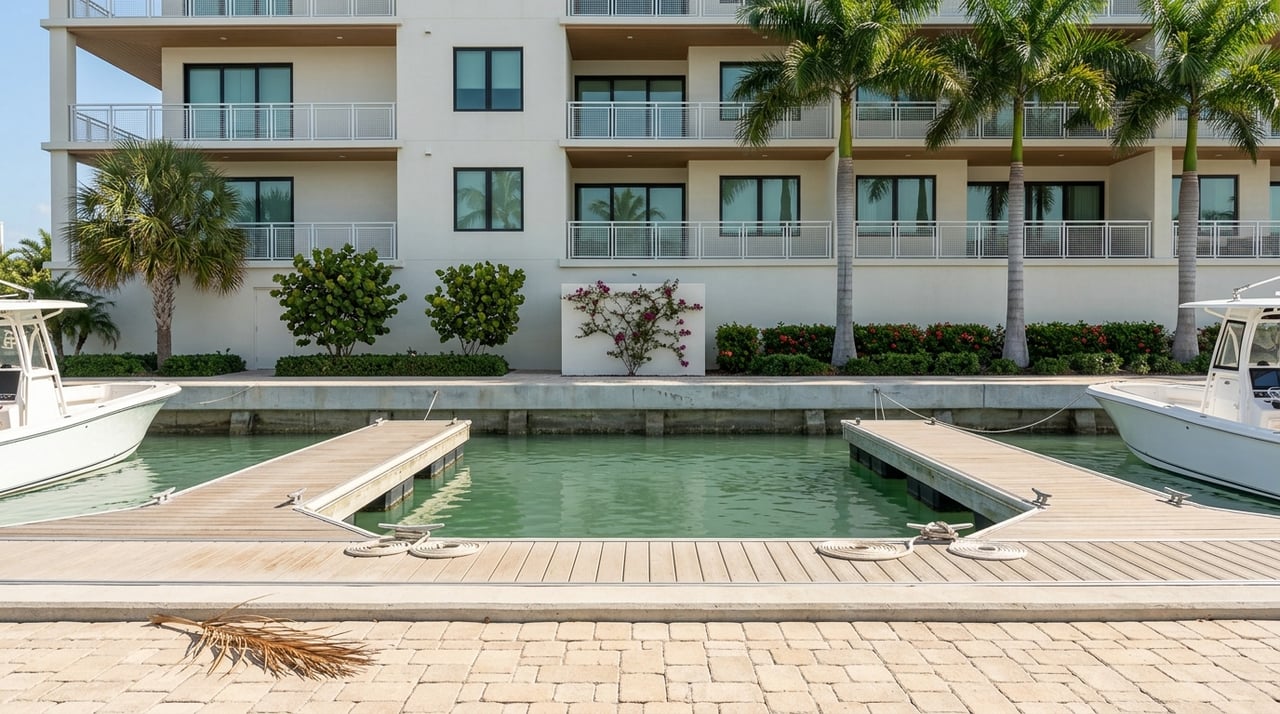
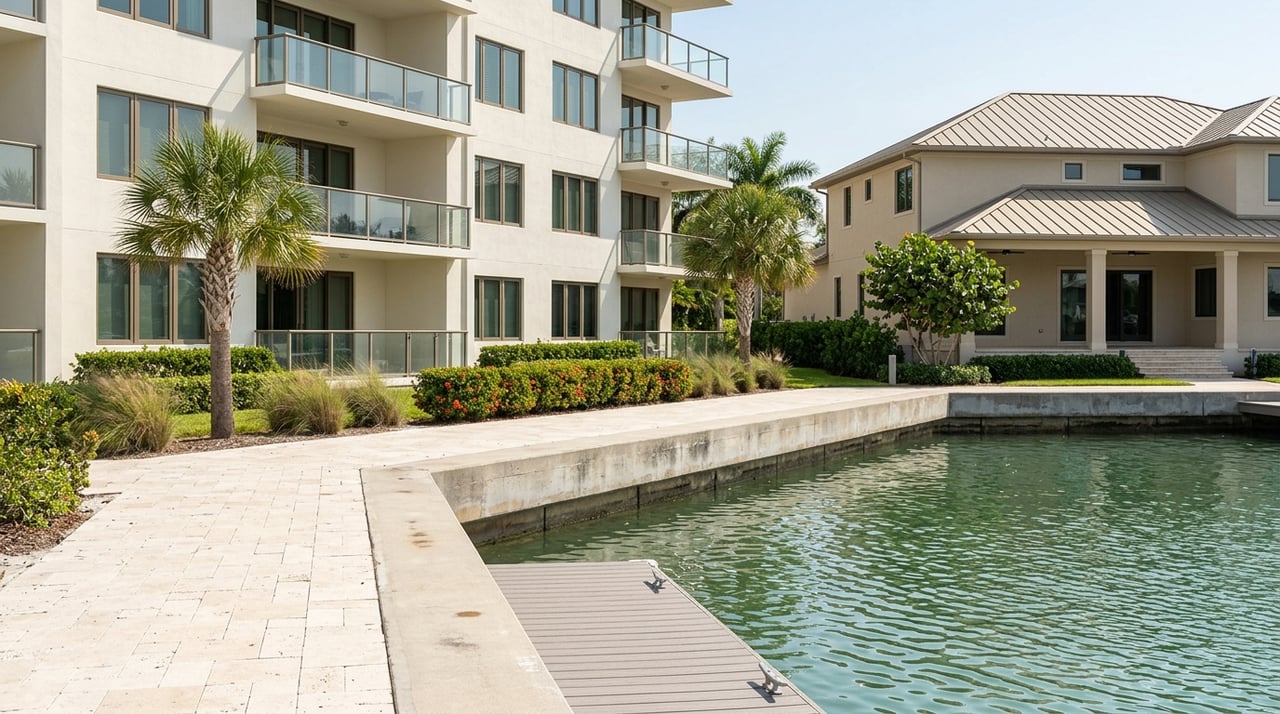
A waterfront condo often appeals to buyers who want less day-to-day exterior upkeep. Under Florida condo law, the association is responsible for maintaining, repairing, and replacing the condominium property it is assigned to handle, which is why condo ownership can feel simpler in daily life.
That convenience comes with shared governance. When you buy a condo, you are also buying into the association’s budget, rules, reserve planning, and the possibility of special assessments.
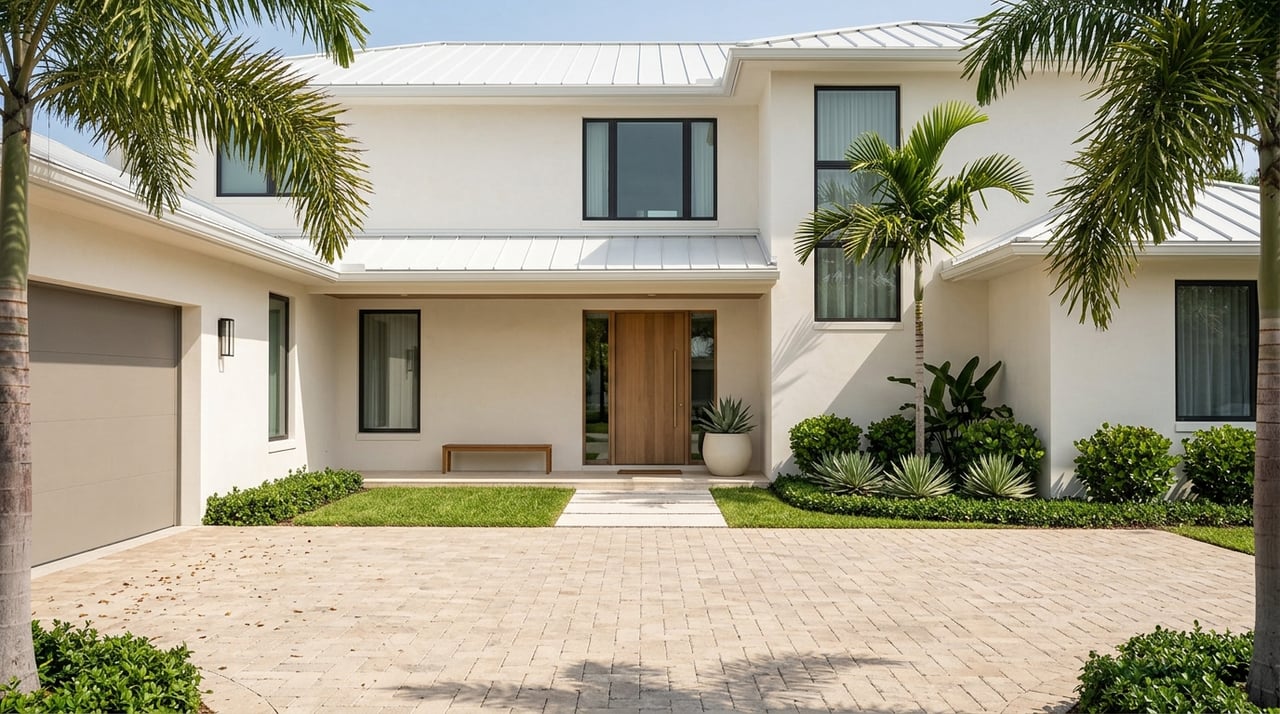
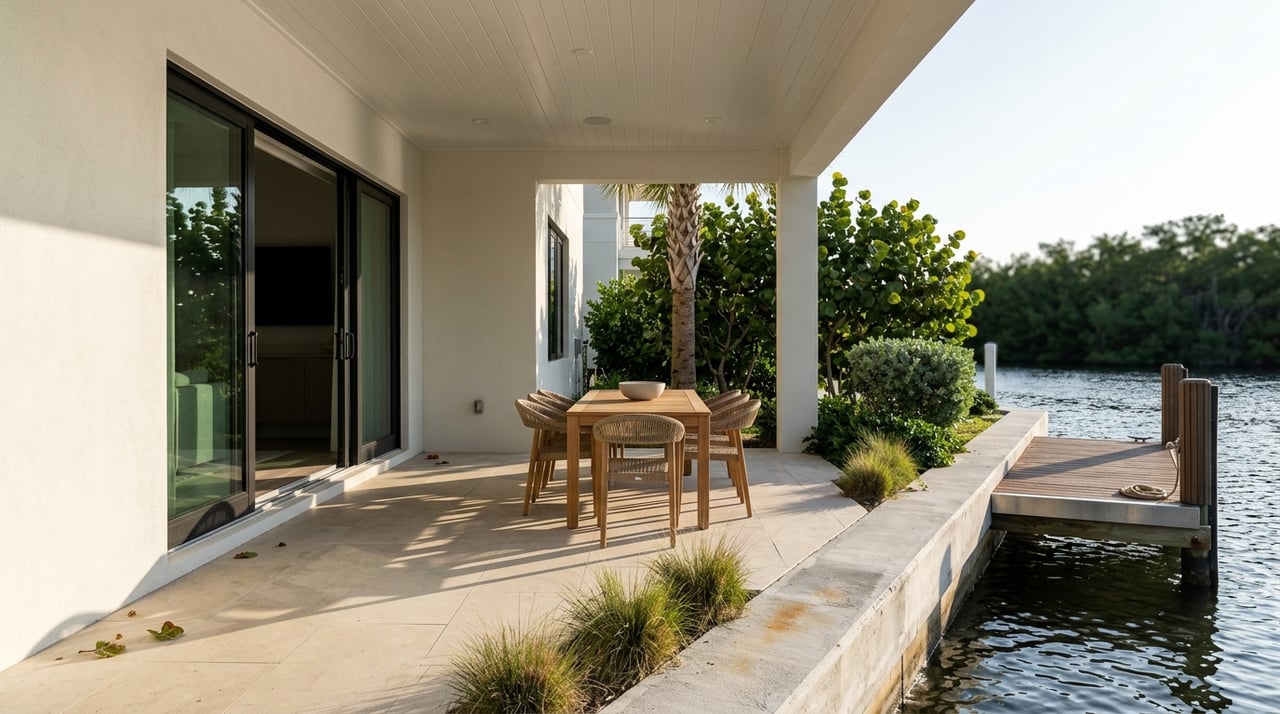
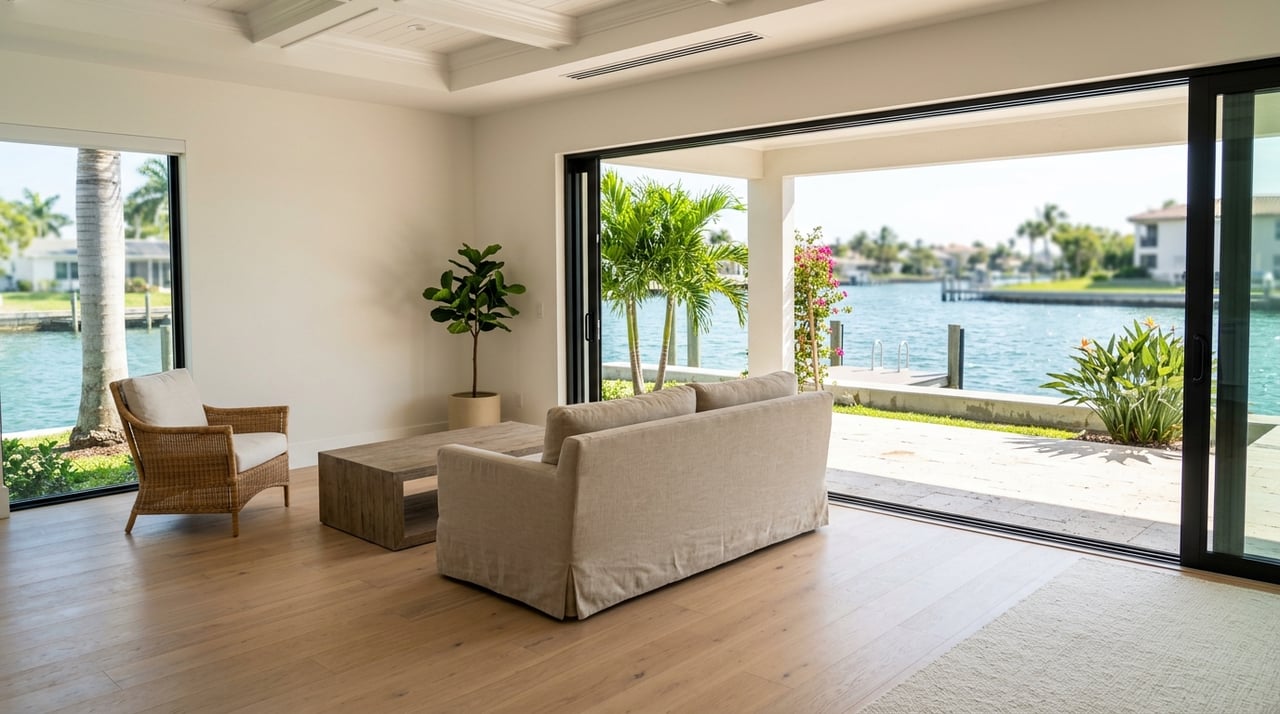
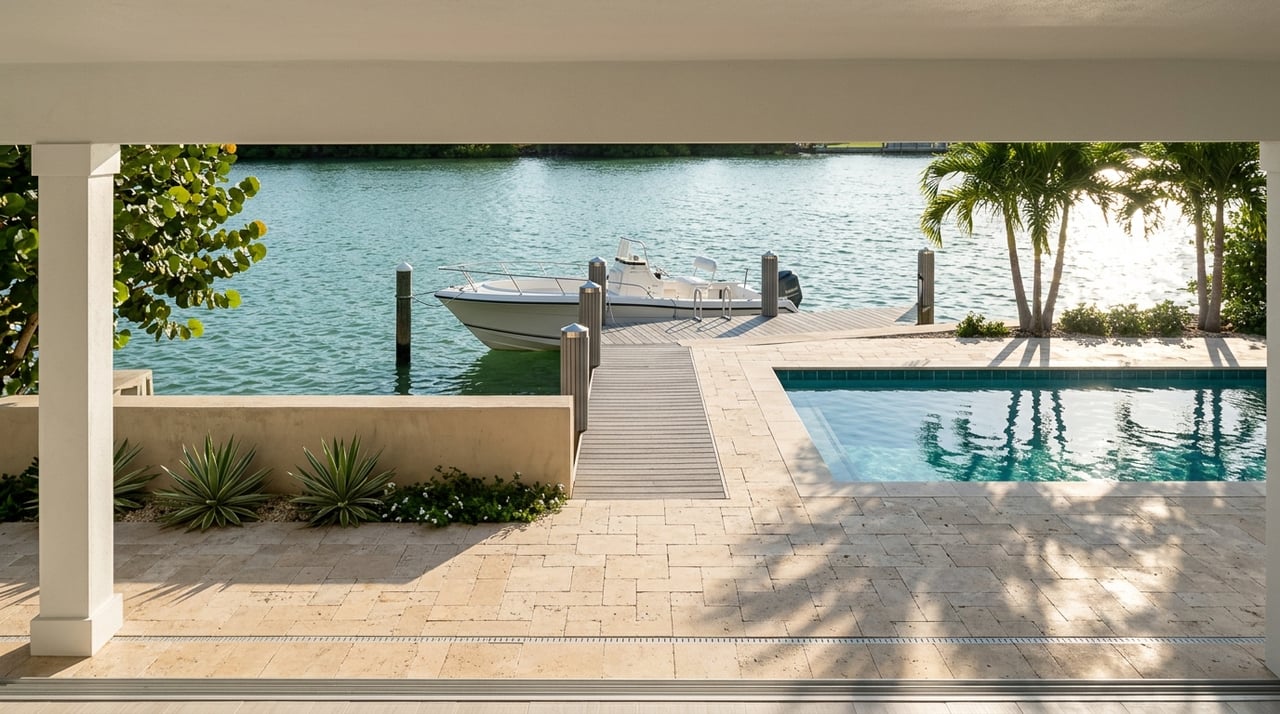
A waterfront single-family home usually gives you more direct control over the property. You may have more privacy, more outdoor space, and more flexibility if you want to improve the yard, shoreline, dock area, or exterior features.
That freedom also means more responsibility. In most cases, you will be managing more of the maintenance, repairs, and insurance decisions yourself.
Insurance works differently depending on which property type you choose. For condo owners, the Florida Chief Financial Officer says unit owners generally need a condo unit-owners policy, often called an HO-6 policy, while the association typically carries master insurance for common areas.
For a single-family waterfront home, your homeowners policy usually covers the dwelling, attached structures, and personal property. But flood damage is typically not covered under a standard homeowners policy, which makes flood insurance an important part of the conversation for many waterfront buyers.
In practical terms, condo owners often pay more through association dues and shared reserves, while single-family owners tend to manage more of the property and insurance directly. The better choice depends on whether you prefer bundled shared costs or more individual control.
If you are considering a waterfront condo in Fort Myers, it is important to understand how Florida’s condo rules affect your purchase. Residential condo buildings that are three stories or higher are subject to milestone inspections at 30 years of age, or 25 years if local enforcement requires it.
Associations for qualifying buildings must also complete a structural integrity reserve study at least every 10 years. Before closing, condo buyers must receive the milestone inspection summary and the most recent structural integrity reserve study, when applicable.
These documents are not just paperwork. They can tell you a lot about a building’s condition, financial planning, and whether future costs may be on the horizon.
Financing a condo can depend heavily on the strength of the association. Fannie Mae’s March 18, 2026 lender guidance noted that rising insurance premiums, limited insurance availability, and underfunded condo reserves can create problems tied to repairs, special assessments, and mortgage risk.
That means two condos with similar views and prices may not be equal from a financing or resale standpoint. A well-funded association with solid documentation may be easier to finance and sell later than a building with deferred maintenance or weak reserves.
Single-family waterfront homes have their own financing and insurance hurdles, especially around flood exposure. Still, they are not typically tied to association reserve health in the same way a condo project can be.
This is one of the biggest points buyers should verify early. A property may be labeled waterfront, but the actual use of docks, slips, lifts, or shoreline features can vary a lot.
In a waterfront condo, dock or slip use may depend on the declaration and association rules rather than the word waterfront alone. You should confirm the legal description, plat, and association documents before assuming you have boating access or exclusive use rights.
For single-family homes, the questions are a little different. You will want to confirm whether existing docks, boat lifts, seawalls, boathouses, riprap, or shoreline work were properly permitted.
Lee County requires dock and shoreline permits for structures like these, and Florida DEP also regulates dock permitting and environmental resource authorizations. If boating is central to your lifestyle, this step is too important to skip.
Waterfront living in Fort Myers can be beautiful, but it also requires more attention to risk. Lee County says flood zones affect flood-insurance rates and construction standards, and properties in Special Flood Hazard Areas with zones beginning with A or V often trigger mandatory flood-insurance purchase requirements for federally backed mortgages.
Lee County also notes that if a parcel is inside an incorporated area such as Fort Myers, residents should contact the applicable city jurisdiction for flood map information. On top of that, the county uses hurricane evacuation zones A through E, so it is wise to verify both flood zone and evacuation zone early in your search.
This applies whether you choose a condo or a house. The difference is that with a condo, some property-level responsibilities may be shared through the association, while with a single-family home, more of that planning usually sits directly with you.
Neither choice is automatically better. The right fit depends on how you want to live, how hands-on you want to be, and how comfortable you are with either shared governance or full property responsibility.
Before you make an offer, compare the full picture instead of focusing only on list price.
For a waterfront condo, review:
For a waterfront single-family home, verify:
For either property type, compare your likely monthly carrying cost, including:
In Fort Myers, a waterfront condo often trades privacy and control for convenience and shared maintenance. A waterfront single-family home often gives you more space, flexibility, and independence, but it usually comes with more direct responsibility for the home, lot, and shoreline improvements.
If you are weighing the two, the best next step is to look beyond the view and compare how each option fits your budget, boating goals, insurance comfort level, and day-to-day lifestyle. That is where a good waterfront decision gets made.
If you want help comparing Fort Myers waterfront condos and homes in a practical, low-pressure way, reach out to Emily Durgan for clear guidance tailored to how you want to live.
Stay up to date on the latest real estate trends.
Bringing deep local insight and a passion for waterfront living, clients are guided through every step with clarity, care, and a focus on finding the right fit.